
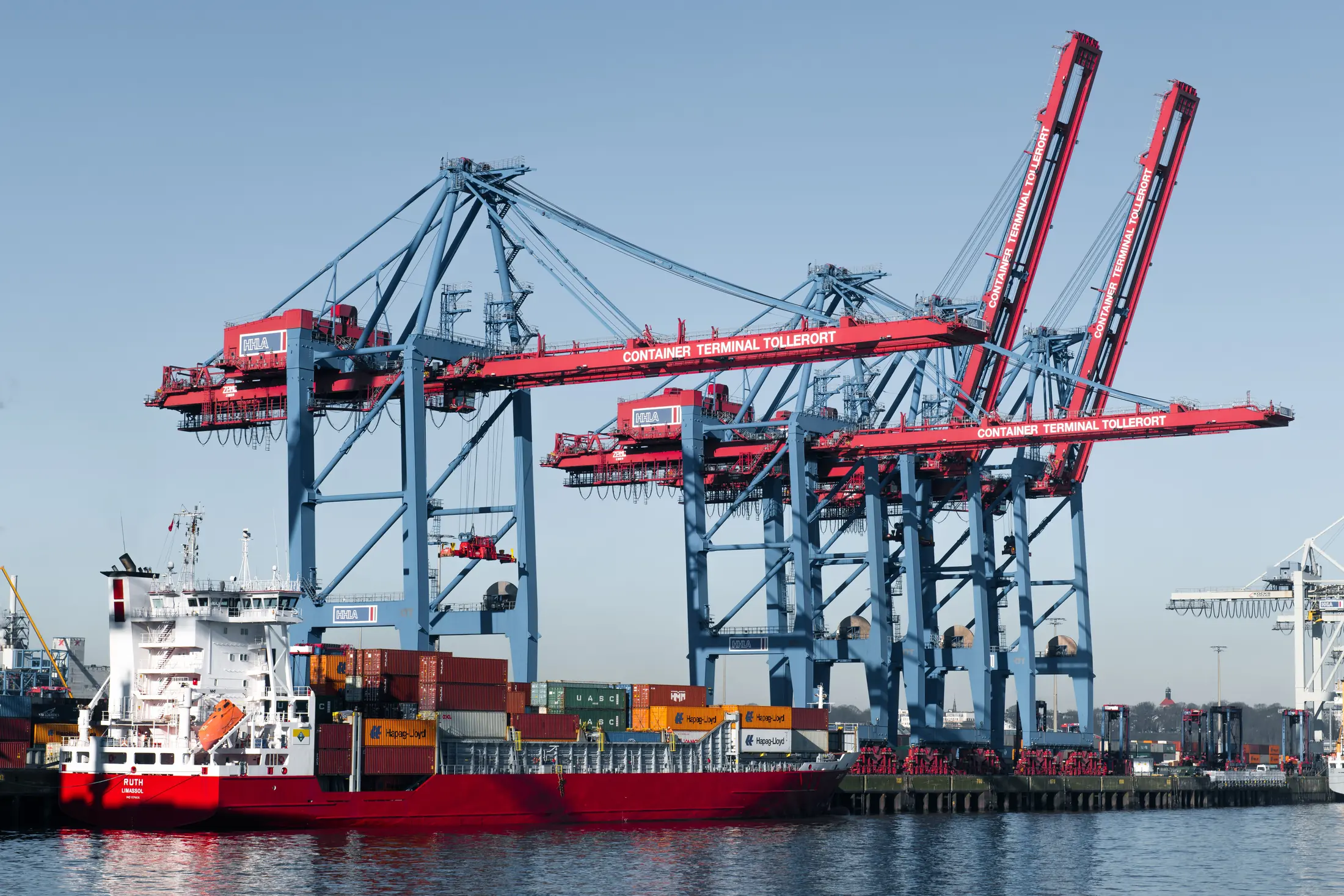
Container terminal, gantry row
Resource library
Where to look things up yourself
Import and export rules are public. The hard part is knowing which source is authoritative and which is a blog repeating a rate that expired last year. These are the primary sources we use every day.
Start here
CCS guides
How to import from China
The full sequence — importer of record, classification, admissibility, the duty stack, bonds, Incoterms, ISF, documents, entry, and what to keep afterwards. Written for the rules as they stand in August 2026, with a duty-stack estimator and a source for every claim.
Read the guide →Cross-border shipping: El Paso & Juárez
Planning inbound and outbound moves across the Texas–Chihuahua bridges, bridge selection and timing, drayage and transloading, and the documentation that keeps a truck out of secondary. In preparation — ask us and we will walk you through it now.
Request a walkthrough →Primary sources
US agencies and official tools
Bookmark these. When a rate or a rule is disputed, this is what settles it.
Harmonized Tariff Schedule (HTSUS)
The official US tariff schedule from the International Trade Commission. Search your product, read the chapter notes, and find the general duty rate plus any Chapter 99 special-programme rates that apply.
hts.usitc.gov →CROSS — CBP ruling database
Every binding ruling CBP has issued, searchable. Before you argue a classification, find out whether CBP has already decided the question for a similar article.
rulings.cbp.gov →US Customs and Border Protection — Trade
CBP enforces customs, immigration and agriculture rules at the ports of entry and facilitates lawful trade. The trade section carries entry guidance, priority trade issues, CSMS messages and programme information.
cbp.gov/trade →Automated Commercial Environment (ACE)
The system through which entries, partner-agency data and export filings are transmitted. Importers can request an ACE Portal account to see their own entry and liquidation history.
cbp.gov/trade/automated →UFLPA Entity List
The Department of Homeland Security list of companies whose goods are presumed made with forced labor and barred from entry. Screen every supplier and named sub-supplier against it before you order.
dhs.gov/uflpa-entity-list →Office of the US Trade Representative
Where Section 301 actions, exclusions, investigations and trade agreements are announced. Rate changes appear here before they appear anywhere else.
ustr.gov →Federal Register & 19 CFR
The Federal Register publishes the notices that make a tariff change real. Title 19 of the Code of Federal Regulations is the customs rulebook itself — entry procedure, valuation, marking, and recordkeeping at Part 163.
federalregister.gov → ecfr.gov →International Trade Administration
Antidumping and countervailing duty proceedings, scope rulings and country-of-origin guidance, plus export counselling for US companies selling abroad.
trade.gov →Product-specific
Partner government agencies
If your product is regulated, CBP will not release it until the responsible agency is satisfied. Find yours before you ship.
Food & Drug Administration
Food, beverages, supplements, cosmetics, drugs, medical devices, radiation-emitting products and food-contact articles. fda.gov
Federal Communications Commission
Any device that intentionally or unintentionally emits radio frequency energy — which is most electronics. fcc.gov
Consumer Product Safety Commission
Children's products, toys, furniture, sleepwear, mattresses, and general consumer goods safety standards. cpsc.gov
USDA Animal & Plant Health Inspection
Plants, plant products, wood, animal products, and wooden packing material treatment marking. aphis.usda.gov
Environmental Protection Agency
Engines and vehicles, refrigerants, pesticides, and chemical substances subject to TSCA certification. epa.gov
Department of Transportation / NHTSA
Motor vehicles, tyres, child restraints and regulated vehicle equipment. nhtsa.gov
Selling abroad
Exporting from the United States
Exporting is a lighter regulatory load than importing until it isn't — and the exceptions are the ones with criminal penalties attached.
Schedule B & the Automated Export System
US exports are classified under Schedule B and, above the filing threshold or where a licence is required, reported through AES in ACE. The Census Bureau publishes the schedule, the filing rules and the search tool.
census.gov/foreign-trade →Bureau of Industry and Security
Export controls, the Commerce Control List, ECCN classification, licence requirements and the restricted party lists. Screening your customers is not optional, and the lists change often.
bis.gov →Office of Foreign Assets Control
Sanctions programmes and the Specially Designated Nationals list. Screen buyers, banks, freight forwarders and end users, not just the name on the purchase order.
ofac.treasury.gov →Export assistance & financing
The International Trade Administration provides market research and in-country counselling; EXIM supports export credit insurance and working capital; the SBA runs export loan programmes for smaller firms.
trade.gov → exim.gov →Plain English
Glossary
The terms that appear on your quotes and invoices, defined without jargon.
| Term | What it means |
|---|---|
| IOR | Importer of record. The party legally responsible to CBP for the entry, the duty and the records. |
| HTS | Harmonized Tariff Schedule. The 10-digit code that determines your duty rate and most of your regulatory obligations. |
| Entry summary | CBP Form 7501. The document declaring what was imported and what duty is owed, due within 10 working days of release. |
| Liquidation | CBP's final determination of the duty owed on an entry, generally within 314 days. Before liquidation you can correct; after, you must protest. |
| ISF | Importer Security Filing, or "10+2". Ocean-only, due at least 24 hours before the cargo is loaded at the foreign port. |
| MPF / HMF | Merchandise Processing Fee and Harbor Maintenance Fee. User fees charged on top of duty; HMF applies to ocean arrivals only. |
| AD/CVD | Antidumping and countervailing duties. Product-and-country-specific orders that can exceed 200% and apply by scope, not only by HTS code. |
| PGA | Partner government agency — FDA, FCC, CPSC, APHIS, EPA and others whose clearance CBP requires before release. |
| UFLPA | Uyghur Forced Labor Prevention Act. Creates a rebuttable presumption that goods linked to Xinjiang or to listed entities are made with forced labor. |
| FCL / LCL | Full container load, where you book the whole box, versus less-than-container load, where your pallets share it. |
| Incoterms | Standard trade terms — EXW, FOB, CIF, DDP and others — defining who pays which cost and where risk transfers. |
| Drayage | The short truck move between port or rail ramp and a warehouse, yard or crossing. |
| Demurrage / detention | Charges for leaving a container inside the terminal too long, versus keeping the equipment outside it too long. Different clocks, different bills. |
| Transloading | Moving cargo from one container or trailer into another — commonly from an ocean container into a domestic trailer. |
| Bonded warehouse | A facility where imported goods can be stored with duty payment deferred until they are withdrawn for consumption. |
| FTZ | Foreign trade zone. A designated site treated as outside US customs territory for duty purposes, allowing deferral, reduction or elimination of duty. |
| Drawback | A refund of up to 99% of duties and fees on imported goods that are subsequently exported or destroyed. |
| Substantial transformation | The test for country of origin: a new article with a different name, character and use. Repacking and relabelling do not qualify. |
| Binding ruling | A written CBP determination you can rely on, requested free through the eRulings portal and typically issued in about 30 days. |
Still not sure which rule applies to you?
That is a normal place to be. Describe the product and the origin and we will point you to the agency that regulates it and the official source that answers it — and where it needs a classification or a ruling, to a licensed customs broker. Whether or not you end up shipping with us.